 By Remini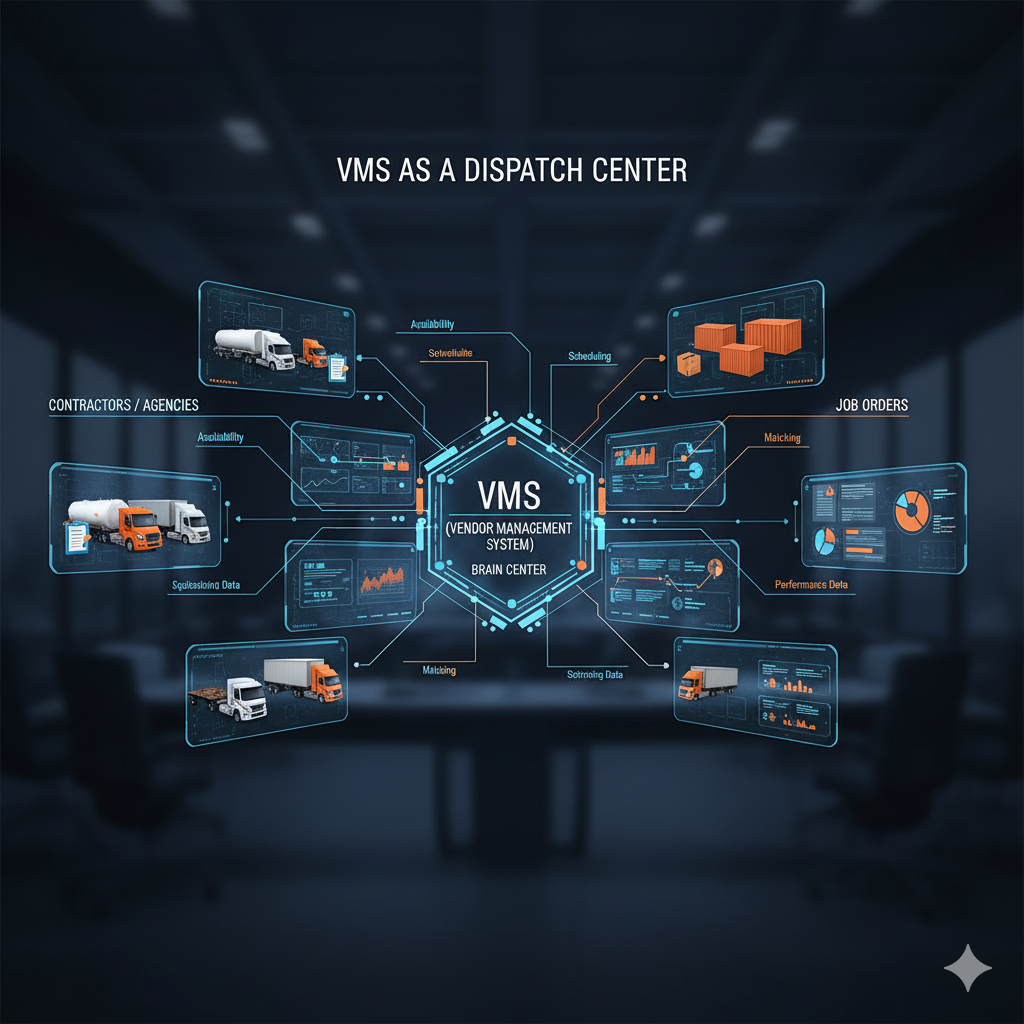
The vendor management system (VMS) is a recruitment software within broader staffing solutions, it enables organizations to centralize their supplier sourcing, evaluation, contract management, and service utilization, along with payments to third-party vendors, independent contractors, and service providers. Put plainly, what is vms in recruitment? It is the orchestration layer for external talent. The mode in which a dispatch center coordinates a fleet of semi-trucks is quite similar to the VMS concept. This is how it works: the dispatch center matches the loads to the drivers, lays down rules about the routes and schedules, logs the fuel and the time for compliance reasons. In recruitment, the “loads” are job orders, the “drivers” are agencies and contractors, the VMS is the routing brain that provides workforce visibility, compliance monitoring, and real-time control over the flow of talent.
The VMS automates supplier management with structured supplier onboarding, supplier performance scorecards, and configurable supplier risk scoring. Agencies and vendors submit candidates and get the status updates through a supplier portal without a single email thread missing.
Instead of sending the order to every agency, order distribution can be run by rules — tiered vendor, geography, niche skills, or performance ranking. This is just as the dispatch center assigns only the most reliable cash freight trucks to the most critical lanes of the truck. This prevents errors in the filling and the quality is still preserved.
Consolidated billing is used for time sheets, expenses, and milestone invoices which are rolled into one single document. Underneath you will find invoice automation, timesheet approval workflows, and standard GL coding which all together, make expenditure management enterprise level.
The VMS is a compliance mechanism operated to its full potential. It does background checks and tracks licenses, and for this, it requires permissions and role-based access to prevent the disclosure of sensitive information, as well as granular role based access controls. Therefore, it leads to effective risk mitigation within the supplier ecosystem.
A hospital using travelers or a 3PL staffing yard driver during peak season is an example of a headcount tracking case which ensures you know who is on-site, where, and under what contract — this mainly supports capacity planning and contingency reporting for the contingent workforce.
The recent VMS systems display reporting and analysis possibilities in the form of configurable analytics dashboards. These e.g., real-time fill rates, cycle times, cost per hire, diversity metrics, rate benchmarking, and utilization trends provide valuable information for better decision making.
What is a Vendor Management System (VMS)?

The centralization of the vendors, orders, interviews, and payments thanks to the centralization provides efficiency and productivity helps. The manual tasks of chasing alerts and setting procurement pathways are automated, and the administrative burden is reduced by templates and checklists.
Tiered vendors, historical ratios, and automation of candidate screening (candidate screening automation) push the rivals forward quickly. The history of the document from submission to hire ratio and on-assignment performance of a supplier base along with this provides better candidate quality.
The compliance through the pre-built rule engines is maintained: for example, EEO tracking, licenses that expire, document retention, and standardized terms of contract management that are aligned to corporate risk posture. The data security policy is managed through one central control point and encryption which secures the personally identifiable information.
Due to the temporary increases or shortages of skills at a regional level, a VMS is able to change background noise to clarity. Use predictive analytics as well as historical data on fills to change vendor mix, optimize pay rates, and plan for peak demand — just like a carrier does with tractors and trailers ahead of a holiday spike.
AI-powered automation handles requisitions by flagging duplicate candidates, proposing shortlists, and recommending vendors based on past success. It works like a dispatcher who knows which trucking team will deliver a load on time through Denver in February.
APIs provide deep HR integrations: HCM master data, single sign-on, learning systems for safety modules, and payroll. The outcome is smoother contractor management, cleaner cost allocation, and one source of truth from req to remittance.
In predictive analytics, the leaders want to learn about the case of raising the bill 5%. In this case, they will fill out the time to fill the segment. This theme will be helpful when the budget owners plan and can defend their investments with solid evidence.
A VMS is a common platform for TA, HR, Legal, Procurement, and Operations. The collaboration is made tighter with the embedded chat, SLAs, and alerts so that requisitions, interviews, and offers move on time together.
VMS explained: how to manage the hiring of flexible staff more effectively
State your recruitment needs: including volumes, geographies, compliance hotspots and the mix of agencies, freelancers, and SOW providers. The organization should have a list of related activities including safety training, as fleet coordinators work in a semi-truck environment.
A list of essential features must be made:
- Multi-vendor vendor catalog and tiering
- Rules-driven order distribution
- Onboarding automation with identity and licensing checks
- Contract management and clause libraries
- Invoice automation, consolidated billing, and rate cards with rate benchmarking
- Analytics dashboards, contingent labor reporting, and exportable data
- Robust access controls, encryption, and audit trails
- Supplier-facing supplier portal and mobile workflows
- Built-in compliance monitoring and alerts
Implementation is a project not a switch. So also, data migration is to be planned, taxonomies need to be aligned (for example, job families, location codes etc.), SSO and the HR integration points are to be learnt. Procurement workflow must be validated, then the timesheet approval mechanism should be tested, and already piloted on small vendor cohorts, before they go live. Spend governance policies and escalation paths must be in place early.
Change management is the reason good platforms fail. Invest in training that is specific to the roles as to recruiters, hiring managers, finance and vendors. Establish 24/7 service support coverage, and maintain a knowledge base and notes on released items. Provide the agency partners with a day in the life guides which will help speed adoption and reduce ticket volumes.
HOW TO START RECRUITING & STAFFING FOR A VMS!


In transport, coordination is essential for a semi-load to move which generally includes the shipper, broker, carrier, and driver. If a tender window is not met there will be detention, penalties, and unhappy customers. There are certainly some close recruitment situations. A VMS corresponds to a top dispatch: it interleaves orders, assigns work to the correct partners, implements safety and compliance practices, and provides proof of the actions taken, including who did it and when. For instance:
- A logistics company needing surge warehouse associates and CDL-A drivers can create two requisitions with distinct safety criteria order distribution sends the CDL req only to vetted suppliers with hazmat capability.
- Headcount tracking shows 38 contractors in Yard A, 22 in Yard B, across two MSPs, while contingent labor reporting summarizes overtime exposure and job end dates.
- When a lane opens for night shift shuttles, capacity planning models predict where suppliers can scale in 72 hours, and rate benchmarking protects margins.
- If a vendor fails a compliance audit, their supplier risk score is automatically lowered, and they are not allowed to submit new candidates until the problem bug is repaired.
The hiring manager uses the VMS to log in, select template, and define work schedule, PPE, certs. Onboarding automation and candidate screen automation attach required checks by role.
The system utilizes performance tiers, distance, and rate caps to push the req to the right vendors via the supplier portal. The embedded contract management rules validate markups that are in accordance with spend governance.
The recruiters check the submissions in the analytics dashboards. AI-powered automation highlights the duplicates and flags the compliance gaps. Interview coordination takes place in-app with SLA timers.
The hires go through timesheet approval, geo-fenced clock-in and the automated reminders process. Workforce visibility shows the absentees, the safety training, and the time served by the vendor and site.
Weekly hours and expenses are compiled into one document, For finance value of accrued items is extracted, and procurement checks audit trails per PO and clause. Security conducts quarterly tests of the data security posture.

- Rate benchmarking discards overpayment risk in hot markets (look like reefer-season surges echo a night shift bonus of premium).
- Unified contractor management with the use of one place to make the change in all vendors is what it is.
- Granular access controls and role-based access limit what internal users and suppliers can see or edit.
- The built-in compliance monitoring continuously checks the licenses, safety certifications which are a must for most of the high-risk or regulated jobs.
- The procurement process is smoother and has less time waste through the req to start dates which directly improves customer satisfaction.
What is vms in recruitment beyond a label? It is in fact an operating framework for external talent where demand meets supply under the guardrails that protect cost, speed and risk.The logistics DNA in your business manifests itself in fleets, warehouse, line haul or last-mile, and thus the connections to dispatch are tangible: routing by rules, breach continuous compliance, telemetry-like analytics, and exception handling on a large scale. As a direct consequence, a smoother funnel for key roles, fewer surprises, and cleaner books become possible.

Knowing what is vms in recruitment is just the first step you will only realize its full potential when you take the journey. Start with a map of your recruitment requirements that is clear and then select a platform that has the VMS features for efficient supplier management, order distribution, consolidated billing, risk mitigation and headcount tracking. Demand reporting and analytics that are strong and AI-powered automation. Also, strict data security which is implemented via encryption and flexible HR integration must be in place. Plan your implementation with care: taxonomies need to be synchronized, invoice automation has to be tested, access controls locked down, and vendor pilots rolled out. Back it all with detailed training and quick support.
By demonstrating exemplary operation of VMS, you will elevate efficiency, productivity and candidate quality while complying better. With advanced predictive analytics, you will see the spikes with features of collaboration, you would not have any bottlenecks with the disciplined contract management and spend governance, you will control costs and with the onboard automation you will have it all in the right shifts i.e. NICU nurses, forklift operators, or linehaul drivers guiding 53-foot trailers through tight delivery windows. And the union of a modern vendor management system – a single pane of glass for the entire external talent engine, tuned for speed, safety, and scale – makes it all possible.