 By Remini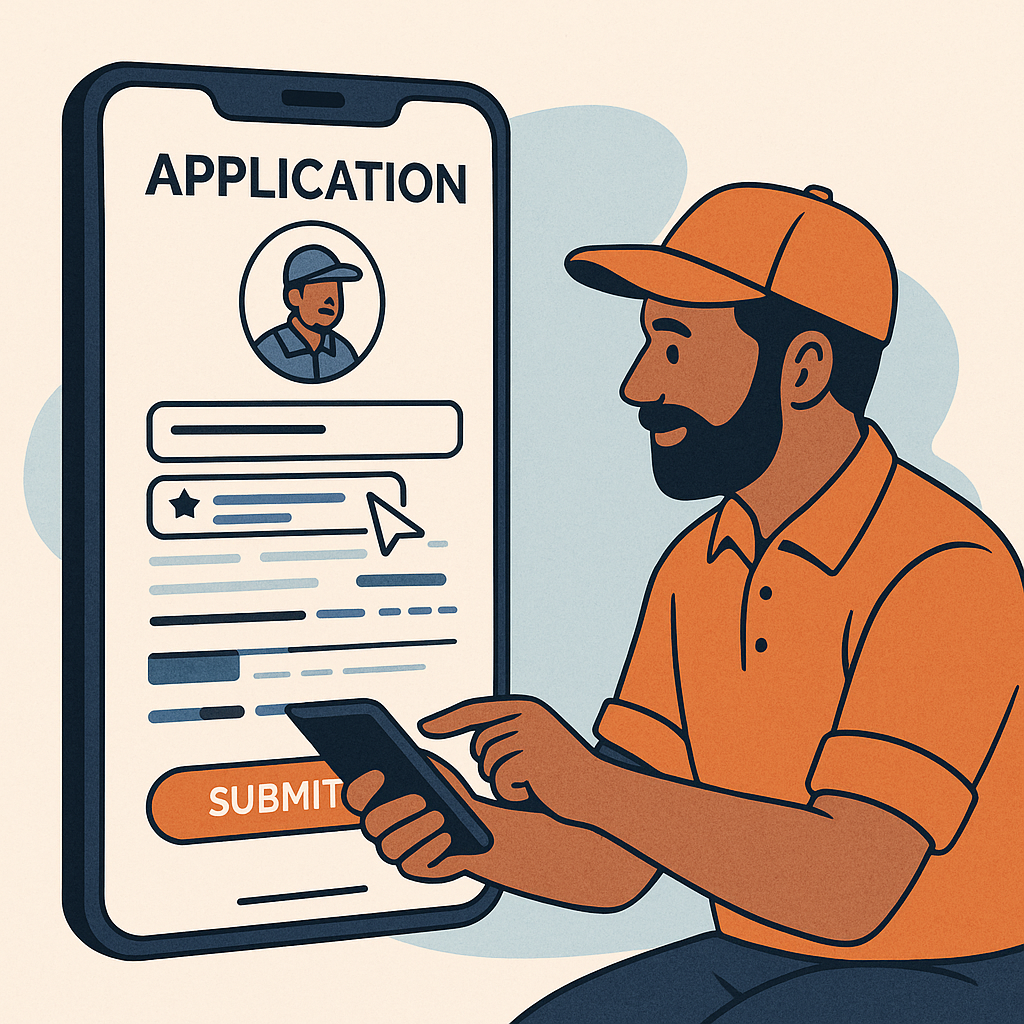
The improvement in the candidate experience and onboarding process of truck driver hiring is of utmost importance and is no longer perceived as a matter of consideration by the human resources department only but rather an absolute strategic necessity. Indeed, gone are the days of just giving a nice time through the application period to the active drivers, these days a supportive driver journey from application to active driver is key to driving up your rates of recruitment in the right truck drivers. Each step of the way, a person is influenced by the automobile company, for instance, from the first click on the “Apply” button to the time they rent the truck for the first trip. If the experience is positive then the rate of dropping out shrinks, the time to hire decreases, and the general long-term retention sees a rise. In this article, you are offered specific tips to improve each process phase, which involves open communication, innovative instruments, and personal touchpoints, thus enabling drivers to thrive.
Candidates who encounter lengthy, complicated forms and petty rules tend to get frustrated and are likely to leave. Hence, a good way to improve candidate experience is:
- Cut down fields: Discard the unnecessary fields and use auto-fill for most common data.
- Mobile first: Validate the mobile interfaces and allow form uploads (CDL, medical certificate) on the move.
- Progress indicators: A visible step tracker decreases applicants’ off-balance anxiety and abandonment.
- Friction points: Identify and remove the repeated data inputs (e.g., license info copy/paste).
By offering a concrete overview you are helping applicants to picture the upcoming steps. Here is an example:
| Stage | Activity | Timeline |
| Application Submission | Online form, document upload | 1 week |
| Screen & Interview | Phone screen, in-person interview | 2–5 days |
| Background & Compliance | Driving record, drug test, medical exam | 3–7 days |
| Final Offer & Onboarding | Offer letter, orientation schedule | 1–3 days |
Just a plain table like this can ensure that the applicants are informed and at the same time, it can help coordinate the internal teams.

The broadest silence will kill the candidate all the time. It is essential to keep the drivers updated at every stage:
- Automated email confirmations
- SMS or WhatsApp updates
- Dedicated recruiter phone outreach
- Messages in a secure candidate portal
Setting up detailed expectations from the beginning: “You will receive a confirmation in 24 hours and be scheduled for your interview in 3 business days”. Respect is shown by regularly sending personalized messages — by addressing the applicants personally and outlining the next steps. A chatbot may be considered for common FAQ or video Q&A appointments that will boost the sense of the applicants’ support and eliminate the questions, “What is next?”.
A one-size-fits-all approach is nearly ineffective in driver recruitment. Alternatively:
- Single contact person: Appoint a recruiter or a coordinator for each candidate.
- Virtual office hours: Organize monthly “ask me anything” webinars where current drivers share their experiences.
- Constructive feedback: Even if the candidates are not selected share valuable insights that would help them in the future.
Personal touchpoints — like a quick call to clarify pay structures or route expectations—show you value applicants as individuals. Therefore, this level of care boosts your employer brand and encourages top candidates to remain engaged.
Onboarding actually starts before the first day:
- Interactive videos: Short clips on pre-trip inspections, cockpit walkthroughs, or company culture.
- Virtual tours: 360° views of terminals, maintenance shops, and dispatch centers.
- Quizzes & checklists: Reinforce key policies—hours-of-service rules, safety protocols, and vehicle inspections.
Non-text-heavy documents are preferred; breaking information into “bite-size” modules for new drivers to complete on their phones or tablets is the idea behind this digital-first Superiority of Culture reoriented training. This digital-first orientation solves paperwork bottlenecks while letting in-person time to focus on introductions and demonstrations.
Prolonged, updated training is not only necessary for compliance but also key to safety:
- E-learning platforms: Host modules on FMCSA regulations, fuel-efficient driving, and defensive techniques.
- Mobile access offline: Allow drivers to learn during downtime—even without Wi-Fi.
- Virtual reality (VR): Simulate hazardous scenarios—like slick road conditions or mechanical failures — in a controlled environment.
Automatic tracking of progress, the issuance of completion certificates, and instant material update when regulations change are guaranteed by this process. Consequently, every driver gets the same level of high-quality instruction regardless of their location.
Long distances can be lonely for truck drivers, especially if they are alone on the road. Suddenly-in-the-beginning connections are the best:
- Welcome lunch or BBQ: Invite new hires and their families for informal introductions.
- Team challenges: Safe-driving score contests, or route-planning puzzles foster friendly competition.
- Private group chats: Create a dedicated channel for new cohorts to ask questions, share tips, and celebrate milestones.
These social activities are the best solution to build drivers’ feelings of being part of a team thus boosting morale and retention starting the first week.
A well-structured mentorship program is a way to accelerate real-world learning:
- Pairing: Match new drivers with seasoned mentors based on region, equipment type, or route specialty.
- Ride-alongs: Schedule joint trips where mentors demonstrate best practices—safe backing, customer communication, and log accuracy.
- Regular check-ins: Weekly calls or visits during the first month to address challenges and adjust training plans.
The act of formally establishing this relationship not only shows your commitment to the drivers’ success but also makes the mentors ambassadors for your company culture.
Your process of onboarding and hiring will be constantly refined by the questions you ask:
- “How straightforward were the application instructions?”
- “Did you feel fully prepared after the orientation?”
- “What would make your training experience better?”
Just love measuring brief surveys after key stages — applicant, day one, week one — and keep track of the trends. If a lot of applicants mention the compliance paperwork as confusing, you might need to collect a form. By closing the loop you let them know how you have taken their input into consideration, hence helping you to build trust and enhance the customer experiences.
What is counted is managed. Keep an eye on these metrics:
- Application completion rate: Identifies drop-off points.
- Time-to-fill: Measures speed of hiring cycles.
- Orientation completion: Flags content overload or technical issues.
- Training quiz pass rates: Ensures comprehension.
- 30- and 90-day retention: Gauges long-term engagement.
Dashboards, which are integrated with your ATS, will enable the hiring teams not only to visualize the data but also to make the bottleneck forecast and to make decisions on staffing requirements. The insights from data will translate the best practices into scalable systems.
Onboarding should be seen, not as a one-time exercise but as a continuous process. The drivers should always be in the loop:
- Milestone check-ins: Plan meetings at 30, 60, and 90 days intervals to either party concerns or to join in the celebration of the safe-mile achievements.
- Micro-trainings: Very short periodic training modules related to Customer service, new regulations, or advanced route planning are available.
- Recognition programs: Digital badges for the first 1,000 award miles or customer testimonies in company newsletters.
The continued connection acts as a manifestation of the drivers’ significance and is a catalyst for the growth of these drivers to loyal, long-term team members.
The main returns expected from investing in candidate experience, truck driver hiring, and onboarding steps are savings, happiness, and decreased turnover. The application form simplification, clear communication, and technology use to community building are all the things that driver furthers its slope of learning. Each of these steps is a thread that weaves the driver into a more complex and robust fabric. For the fleets that work with the Trucking Talent team, it is actually pretty easy, to integrate these strategies, which results in safety, satisfaction, and a true competitive advantage in a tough labor market.